
Romantics Anonymous: A Chocoholics’ Dream Series

When I watched and subsequently reviewed the Korean drama series Bon Appetit, Your Majesty some months back, I had not planned to be writing another food-centric review of a drama series in the foreseeable future. I generally don’t watch dramas (my focus is more on cinema).
But then, in one of its occasional ‘We think you might like this’ mails that Netflix sends out to its subscribers, I saw Romantics Anonymous, and my interest was immediately piqued (for once, an algorithm got it right!). I ended up watching it, and loved it. Enough to want to write about it, and to recommend it.
An eight-episode Japanese-Korean series, Romantics Anonymous is based on a Franco-Belgian series of the same name. This spin-off has a mostly Japanese cast, with one major exception: the female lead is the Korean actress Han Hyo-Joo, who plays Lee Hana, a genius chocolatier who lives and works in Japan. Hana is brilliant with chocolate, but she has a debilitating condition: she suffers from scopophobia and cannot make eye contact with people.
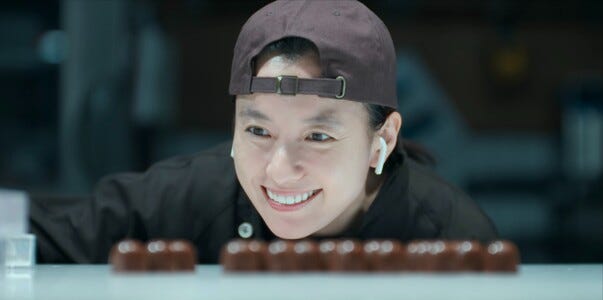
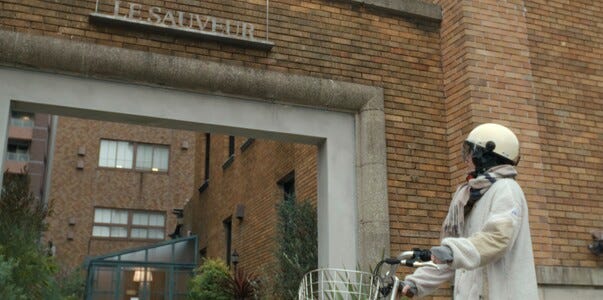
As a result of this condition, Hana does not actually work at the city’s premier chocolate store, Le Sauveur; she supplies it. The chef-owner of Le Sauveur is her mentor, an old man with whom she shares an affectionate rapport. He is the only one who knows who ‘the anonymous chocolatier’ is, the person who comes by every morning, wearing helmet and heavy jacket, to leave the day’s supply of handmade chocolates in a specially-designated box outside the store.
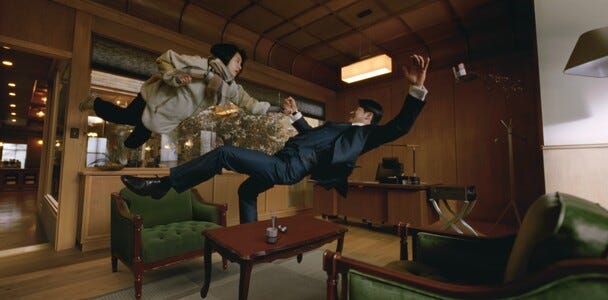
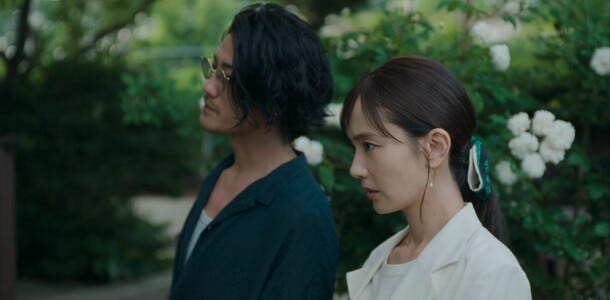
Then the chef dies, and Le Sauveur is taken over by a big confectionery company. The heir to the company, Fujiwara Sosuke (Shun Oguri) comes to manage Le Sauveur. Like Hana, he too has a condition: mysophobia. He is so terrified of contamination that he recoils from touching anyone. Oddly enough, both Hana’s and Sosuke’s conditions don’t manifest themselves when they’re with the other person: Hana can look Sosuke in the eye, and he has no trouble touching her.
While Hana’s and Sosuke’s slow (and very sweet) romance is the focus of the show, a major part is played by the shared love for chocolate that brings them together. The main showcase of Hana’s skill as a chocolatier is a seven-flavour assorted chocolate box known as the ‘Rainbow Palette’, and each of the chocolates in this becomes the anchor for an episode. Each, too, brings with it some aspect of human interaction with chocolate.
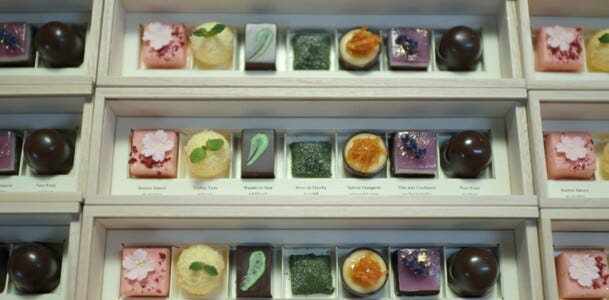
There’s the spécial orangette, with orange pulp and zest swirled through milk chocolate. A woman whose sister used to buy it for her when she was a child now comes to Le Sauveur, saying that the orangette tastes different now from what it used to all those years back—and she would like a box of the ‘original’ orangette for her now-terminally sister. But who knows how that orangette was made?
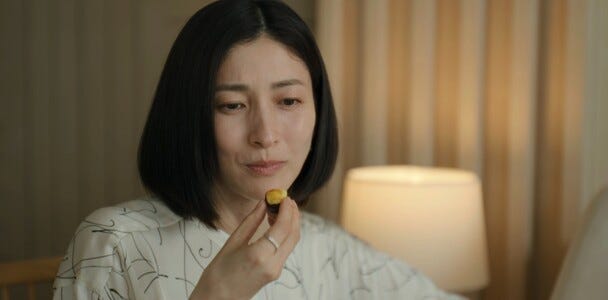
Then there’s the truffles yuzu, which has yuzu jam added to it. And the man who supplies that jam is a mercurial sort, who seems to have decided he will not supply Le Sauveur anymore, since his old pal the chef died… (I have a special fondness for yuzu, so this one really appealed to me; so much so that I tried desperately to find yuzu marmalade online in India, and gave up only when I realized that though one could get it, the real thing is eye-wateringly expensive).
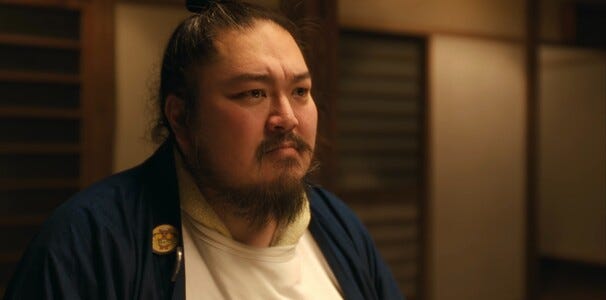
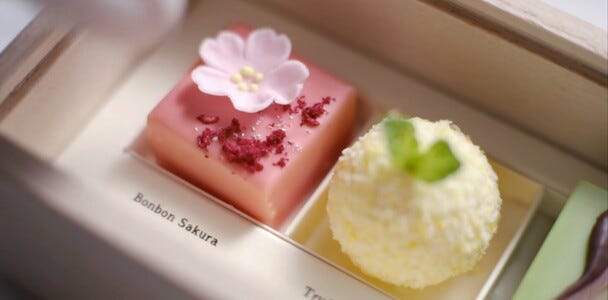
There’s bonbon sakura, which ties the chocolate in with another supplier: a woman who produces a fine Sakura liqueur without which this particular chocolate is impossible to make. A woman, though, who is very proud of her creation and will not sell it to anyone who doesn’t pass her very stringent test.
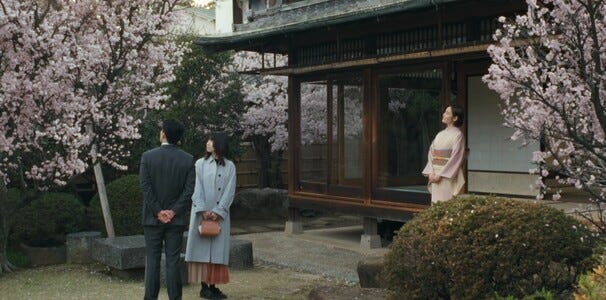
Along with pure kenji (a chocolate named after the old chef, who invented it), bonbon sakura and truffles yuzu are chocolates—and episodes—that highlight the role suppliers play in chocolate. The pure kenji episode, in fact, travels out of Japan and to a fictitious cacao-growing area (probably in Indonesia), where Sosuke and Hana meet people who grow the fruit from the beans of which chocolate is finally produced.

Of course, those who make the chocolate, and those who consume it, are equally the focus. The memories (often dating back to childhood) which we have of chocolate, the happiness they evoke, the way they bind people together—all of these come together, again and again, through the episodes. They’re always in different ways, though, some touching, some bitter-sweet. One of the most poignant is Sosuke’s own backstory, which ties in with his OCD.
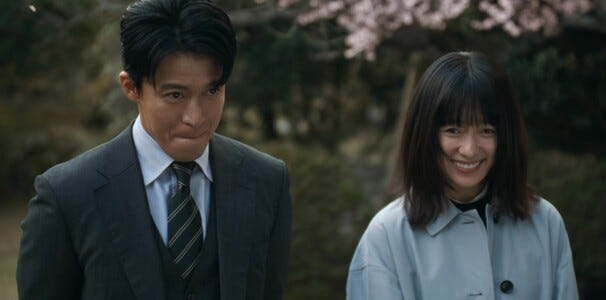
I really enjoyed the fact that Romantics Anonymous is not merely a series a foodie might enjoy; it is also, overall, a well-made series, with a nuanced look at human relationships. The two main characters are flawed, and therefore more relatable (and their romance the sweeter for it). The secondary characters—a young musician who works at a bar, and a psychiatrist who is commitment-phobic—have their own beguiling romance too…
… and (did I mention this before?), the chocolate looks absolutely gorgeous.

I would recommend this one, even more than Bon Appetit, Your Majesty. That was good; this one is better.
Buy me a coffee! If you like what you’ve read, please consider leaving a donation. I work very hard to put quality writing out there for readers like you, and your support will go a long way in helping me continue to write stuff worth reading.
Sounds amazing, and delicious!